Therapeutic Laser Physiotherapy in Oakville
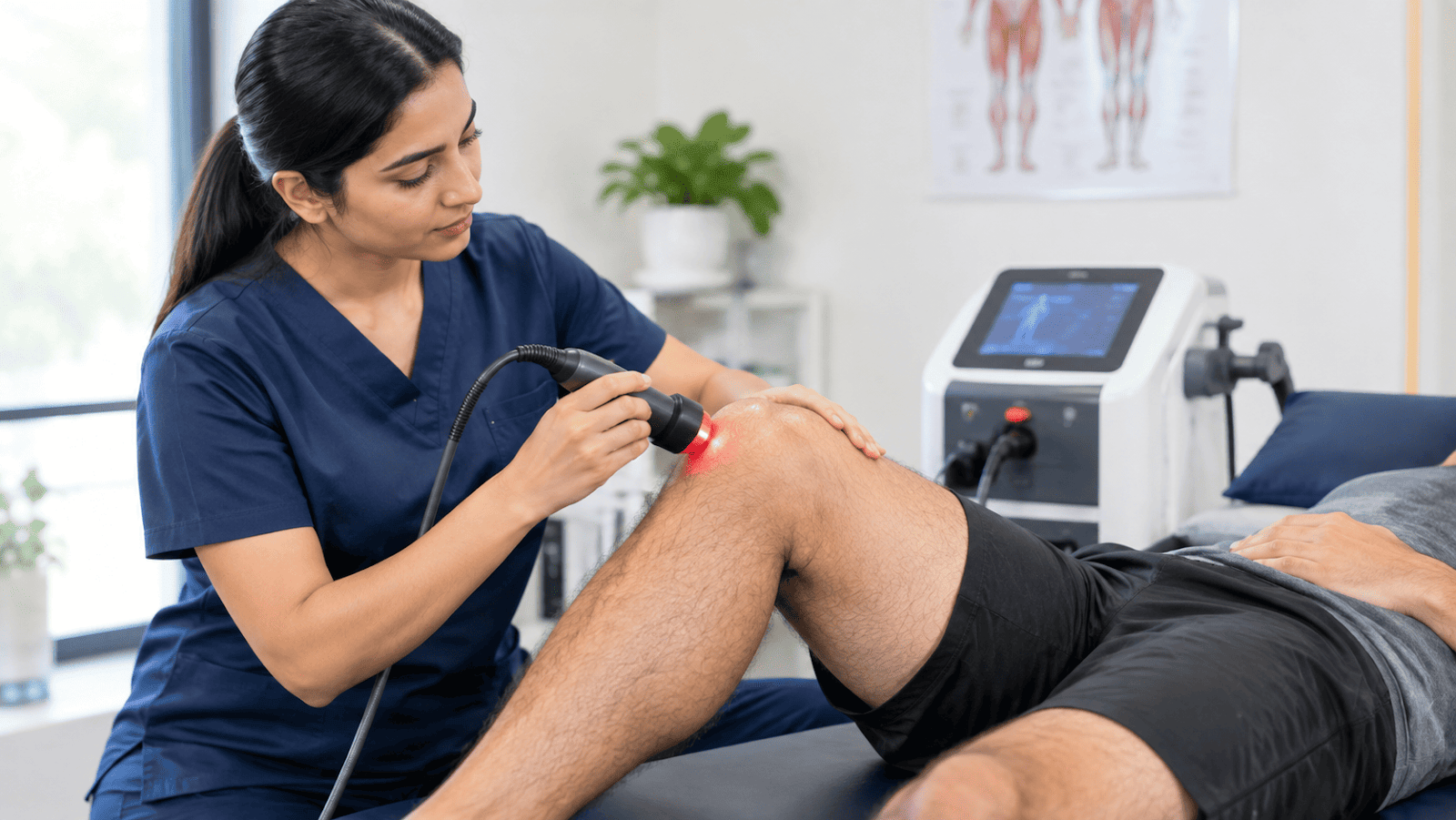
Laser therapy in physiotherapy uses specific wavelengths of light delivered to targeted tissues. Also known as photobiomodulation, it may help manage pain, reduce inflammation and support tissue recovery when clinically appropriate.
At Oakville Physiotherapy Centre, our approach combines laser therapy, physiotherapy assessment and targeted rehabilitation. Each physiotherapy laser treatment is selected and dosed by a registered physiotherapist based on your condition, symptoms and treatment goals. Laser physiotherapy may also be combined with manual therapy and therapeutic exercise as part of a personalised recovery plan.
Benefits of Laser Physiotherapy
Explore six evidence-informed ways photobiomodulation may support pain management, tissue recovery and rehabilitation.
Non-Invasive Pain Relief
Low-level laser therapy stimulates cellular repair at depth without needles, surgery, or systemic side effects. Photons penetrate tissue to trigger natural healing cascades — effective pain relief without pharmacological dependency.
Accelerated Tissue Healing
Photobiomodulation increases ATP production, enhances mitochondrial function, and upregulates collagen synthesis. Tissues that normally take weeks to heal can respond in days under optimised laser protocols.
Reduces Inflammation
Laser therapy modulates the inflammatory cascade — reducing pro-inflammatory cytokines and promoting anti-inflammatory mediators. The result is reduced swelling, improved circulation, and faster resolution of acute and chronic inflammation.
Nerve Regeneration Support
At therapeutic wavelengths, laser energy promotes axonal sprouting, remyelination, and improved nerve conduction velocity. Neuropathic pain, numbness, and tingling often respond where other modalities plateau.
Precise, Targeted Delivery
Modern Class IV laser systems allow clinicians to dial exact wavelengths, power densities, and dose parameters for specific tissue depths and pathologies — a level of precision unavailable with ultrasound or TENS.
Rapid Session Times
Most laser therapy treatments are completed in 5–15 minutes. Higher-powered Class IV units deliver therapeutic doses faster than lower-powered devices, allowing effective treatment to fit into any schedule.
Conditions We Treat with Laser Physiotherapy
Select a category to explore conditions that may benefit from physiotherapy laser treatment.
Musculoskeletal Conditions
- Osteoarthritis (knee, hip, shoulder)
- Rotator cuff tendinopathy
- Plantar fasciitis
- Achilles tendinopathy
- Lateral & medial epicondylalgia
- Patellar tendinopathy
How a Physiotherapy Laser Treatment Plan Works
Explore six structured steps, from your initial assessment and personalised laser physiotherapy plan to progress reviews and discharge.
Initial Consultation
Full history, pain mapping, and pathology identification. We determine whether laser is the primary modality or a component of combined treatment.
Begin Your Course →Laser Physiotherapy Protocols We Use
Four evidence-informed delivery modes, selected and dosed according to your condition, symptoms and treatment goals.
Dosimetry & Assessment
Effective laser therapy is not 'point and shoot.' Our physiotherapists calculate precise energy doses (Joules/cm²) based on tissue type, depth, pathology stage, and individual response. Wavelength selection — 810nm for superficial neural tissue vs 1064nm for deep musculoskeletal targets — changes therapeutic outcomes entirely.
Why Choose Oakville Physiotherapy for Laser Therapy?
Personalised laser physiotherapy integrated into a complete rehabilitation plan.
- Class IV laser selected for your condition
- Physiotherapy laser treatment tailored to each session
- Combined with manual therapy and exercise when appropriate
- Treatment provided by registered physiotherapists
- Progress tracked from your first appointment
- Direct billing to major insurance providers when permitted
Laser Physiotherapy in Oakville FAQs
Everything you need to know before your first laser session.