
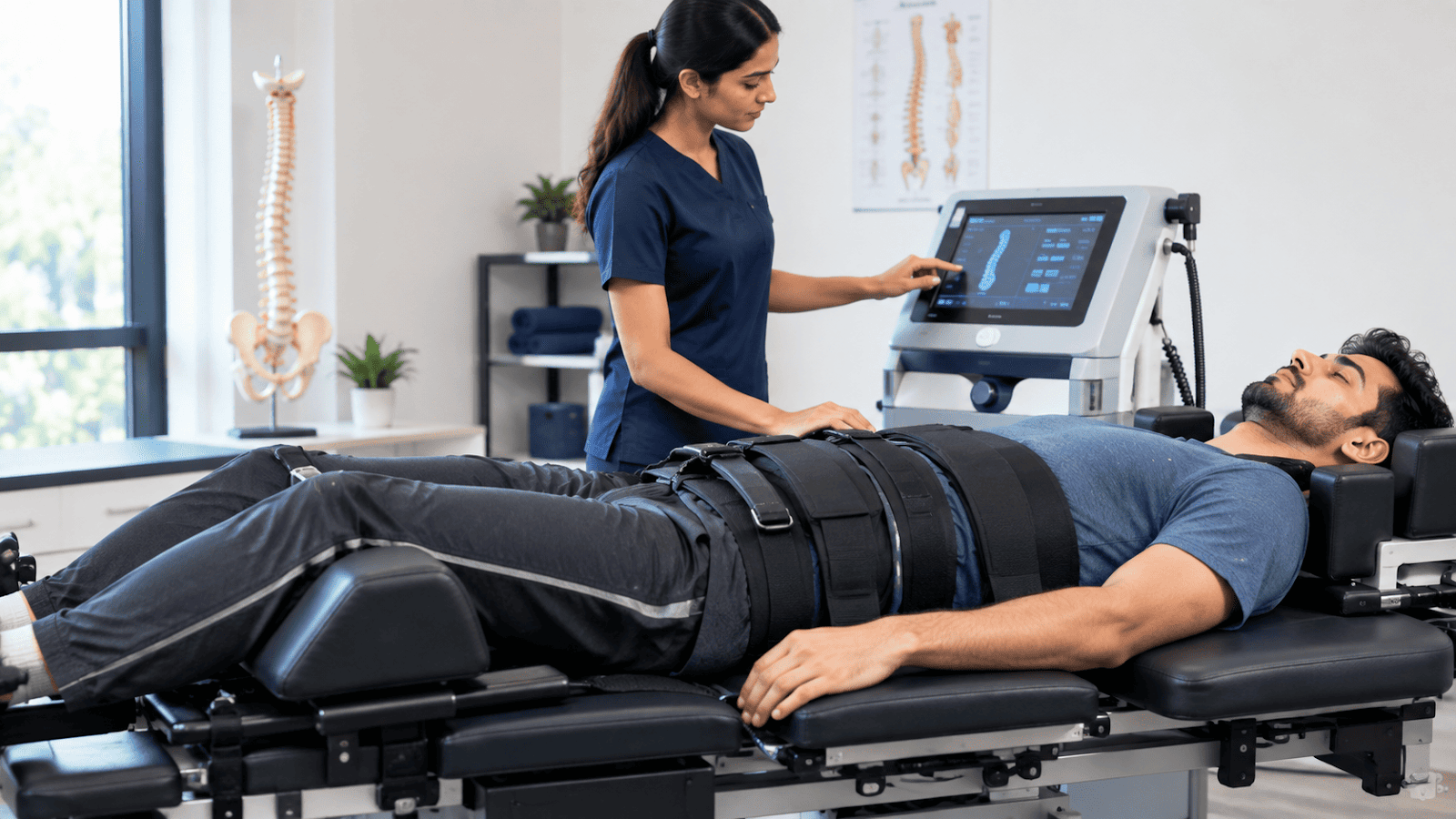
Spinal Decompression Physiotherapy in Oakville
Persistent back or neck pain can affect sleep, work, exercise and daily life. If you have sciatica, disc herniation or degenerative spinal changes, a detailed physiotherapy assessment can help identify factors contributing to your symptoms and guide appropriate care.
Non-surgical spinal decompression physiotherapy uses a motorised table to apply controlled, intermittent traction to the spine. Some patients may experience short-term symptom relief, but responses vary, and treatment should not be presented as repositioning disc material or permanently rehydrating discs.
At Oakville Physiotherapy Centre, decompression is considered only as part of a personalised rehabilitation plan. For disc herniation treatment, physiotherapy may also include education, targeted exercise, mobility work, manual therapy and postural guidance. If you are searching for spine physiotherapy near me, our registered physiotherapists provide one-on-one care based on your assessment and goals.
See It In Action
Use the interactive diagram below to visualise exactly what happens to a compressed disc — and how decompression therapy reverses that compression:
Interactive Disc Visualizer
Toggle to see how decompression relieves nerve pressure
The Numbers Speak for Themselves
Our spinal decompression outcomes at Oakville Physiotherapy Centre
Patients report significant pain relief
Sessions in a typical full program
Faster recovery vs. rest alone
Oakville patients successfully treated
Conditions We Treat
Click any condition below to explore its description, mechanism, and the symptoms that spinal decompression directly addresses:
Sciatica
Pain that travels from the lower back into the legSciatica occurs when nerve roots in the lower spine become irritated or compressed, often due to disc herniation, spinal stenosis or degenerative changes. Physiotherapy focuses on relieving symptoms, restoring movement and rebuilding strength. Spinal decompression physiotherapy may be considered after assessment, but results vary.
Common Symptoms:
- ✓Sharp or burning pain down one leg
- ✓Numbness or tingling in the foot
- ✓Weakness in the affected leg
- ✓Pain aggravated by sitting or certain movements
Not Sure If This Is Right for You?
Use our quick symptom checker to see which conditions commonly affect your pain area — and whether spinal decompression may be an appropriate treatment option:
Where Is Your Pain?
Click the area that best matches your symptoms to see which conditions may be involved.
Benefits of Spinal Decompression
Hover over each card to learn more about how decompression therapy improves your spinal health:
Relieves Disc Pressure
Gentle traction creates negative intradiscal pressure, drawing herniated or bulging material back toward the centre of the disc.
Retracts Herniated Discs
Sustained decompression pulls herniated disc material away from nerve roots, reducing compression and the associated pain and tingling.
Enhances Nutrient Flow
The pumping action during treatment floods dehydrated discs with oxygen-rich fluid, accelerating cellular repair and disc rehydration.
Non-Invasive & Drug-Free
Spinal decompression is a completely non-surgical, medication-free approach — no anaesthesia, no incisions, and no recovery downtime.
Restores Spinal Mobility
By reducing nerve and disc compression, decompression allows for greater range of motion, flexibility, and pain-free daily movement.
Long-Term Pain Relief
Unlike painkillers that mask symptoms, decompression addresses the structural root cause — delivering durable, lasting relief from chronic back and neck pain.
Relieves Nerve Pain
By decompressing the spaces where spinal nerves exit, treatment reduces radiating pain, numbness, and tingling that travel into the arms or legs.
Avoids Surgery
Many patients who are surgical candidates find that a full course of decompression therapy eliminates the need for invasive procedures entirely.
What to Expect at Your First Appointment
Every step of your care is structured, transparent, and focused entirely on your recovery. Click each step to expand the details:
Don't Let Back Pain Run Your Life
Book your spinal decompression assessment today. Our team will confirm whether you're a candidate and start building your personalised recovery plan — on the very first visit.
Book Your Assessment