
Myofascial Release Therapy in Oakville
Persistent muscle tension, stiffness or restricted movement can affect everyday activities. At Oakville Physiotherapy Centre, myofascial release therapy may be included after a registered physiotherapist assesses your symptoms, movement and health history.
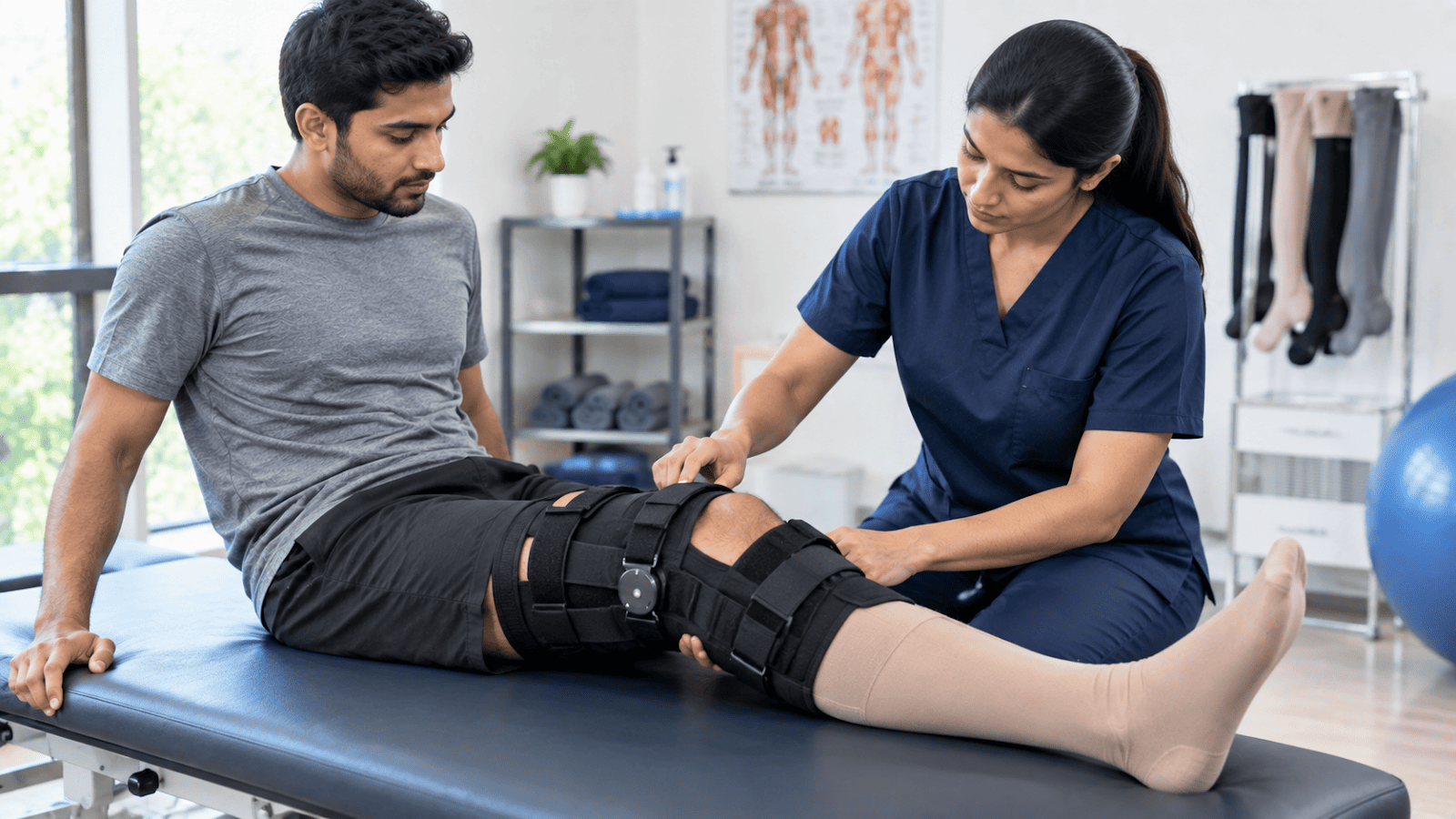
Treatment uses slow, controlled pressure or gentle stretching applied to selected soft-tissue areas. It may support some people managing musculoskeletal pain, reduced mobility, post-injury stiffness or post-surgical tightness when clinically appropriate. The technique and pressure are adjusted to your comfort and response.
Evidence for myofascial release varies, and results differ between individuals. It is not a cure or a replacement for medical assessment. We combine hands-on care with mobility exercises, strengthening, activity guidance and a personalised home program.
If you are searching for myofascial release therapy near me, our Oakville team can assess whether this approach is suitable for your condition and recovery goals.
Understanding Fascia and Myofascial Release Therapy
Fascia is connective tissue that surrounds and supports muscles and other body structures. Understanding its role helps explain how myofascial release therapy may be used alongside exercise and movement-based rehabilitation.
Fascial Support
Fascia contributes to support, movement and force transfer. Because pain and stiffness can involve several tissues, assessment should consider muscles, joints, nerves and movement patterns not fascia alone.
Pressure Based on Your Response
Myofascial release uses slow, controlled pressure or gentle stretching. There is no universal hold time for every patient. Your physiotherapist adjusts the location, pressure and duration according to your comfort and response.
Whole-Body Movement
Posture, strength, activity levels, previous injuries and daily movement habits may all influence symptoms. Treatment therefore looks beyond the painful area without assuming that one fascial restriction is the sole cause.
Integrated Rehabilitation
Some people may experience short-term improvements in pain or mobility, but research findings remain mixed. Myofascial release does not guarantee permanent tissue change and should not replace medical assessment.
At Oakville Physiotherapy Centre, myofascial release therapy is combined with exercise, education and activity guidance when clinically appropriate.
Your Myofascial Release Therapy Journey
Every myofascial release therapy program at our Oakville clinic begins with a detailed assessment of your symptoms, movement and goals. Explore each stage to learn what to expect from your first appointment onward.
Postural & Movement Screen
Your therapist begins with a full-body postural assessment and movement screen to identify fascial restrictions, asymmetries, and compensatory patterns that may be contributing to your pain — including areas far from your primary complaint.
Fascial Restriction Mapping
Using skilled hands-on palpation, your therapist locates areas of fascial tightness, thickening, and reduced glide throughout the connective tissue system. Restrictions are often found at a distance from the site of pain due to the tensegrity nature of the fascial web.
Personalised Release Program
A treatment plan is developed that sequences releases from proximal to distal, addressing root restrictions before secondary compensation patterns. The number and focus of sessions is determined by the depth, chronicity, and complexity of your fascial restrictions.
Hands-On Release & Integration
Treatment is applied with slow, sustained pressure held for 90–120 seconds per barrier — the time required for true viscoelastic change in fascial tissue. Sessions conclude with movement integration and a home self-release program using tools such as foam rollers and release balls.
Myofascial Release Therapy Techniques
Our therapists select the most appropriate technique or combination based on your assessment, areas of restriction, symptom duration and tissue sensitivity.
Direct MFR
Targeted structural release
The therapist engages the fascial restriction directly, applying slow, firm pressure into the barrier and waiting for the tissue to soften and lengthen. Ideal for localised restrictions, scar tissue, post-surgical adhesions, and deep structural tightness. Produces rapid, specific changes in tissue mobility.
Indirect MFR
Whole-system unwinding
The therapist follows the tissue's inherent micro-movements — gently guiding it toward ease rather than into resistance. This technique allows deeply held compensatory patterns to unwind spontaneously and is particularly effective for chronic, multi-regional pain, trauma-related restrictions, and hypersensitive nervous systems.
Myofascial Dry Needling
Trigger point deactivation
Fine acupuncture needles are inserted into active myofascial trigger points — hyperirritable nodules within taut bands of muscle — to elicit a local twitch response that deactivates the trigger point, releases the taut band, and restores normal neuromuscular function. Often combined with manual MFR for faster, more durable results.
Your therapist will explain which myofascial release technique or combination is best suited to your symptoms, assessment findings and treatment goals.
Conditions We Treat with Myofascial Release Therapy in Oakville
Myofascial release therapy may help when soft-tissue restrictions contribute to pain, stiffness or limited movement. Conditions we commonly assess include:
- Chronic neck, back, and shoulder pain
- Myofascial trigger points and referred pain
- Fibromyalgia and widespread musculoskeletal pain
- Post-surgical scar tissue and adhesions
- Plantar fasciitis and heel pain
- IT band syndrome and lateral knee pain
- Tension headaches and TMJ dysfunction
- Thoracic outlet syndrome
- Piriformis syndrome and hip impingement
- Sports injuries and overuse conditions
- Postural dysfunction and forward head posture
- Post-mastectomy and post-radiation tightness
Unsure whether myofascial release therapy is appropriate for you? Contact Oakville Physiotherapy Centre for a complimentary screening call before booking.
Are You a Good Candidate for Myofascial Release Therapy in Oakville?
Myofascial release therapy (MFR) tends to produce the most significant results for patients with the following profiles:
- Chronic pain that hasn't responded to other treatments
- Pain that is diffuse, shifting, or hard to localise
- Stiffness and restricted movement without clear structural cause
- History of trauma, surgery, or prolonged immobilisation
- Recurring injuries in the same region
- Tension headaches or jaw pain with no dental cause
- Athletes with persistent soft-tissue tightness
- Post-mastectomy or post-radiation chest and arm restriction
Maximising Results from Myofascial Release Therapy
Fascial change can be gradual, and what you do between myofascial release therapy sessions may support your progress. We provide every patient with a structured self-care program built around four pillars:
Foam Rolling & Self-Release
Your therapist prescribes specific foam roller and release ball techniques targeting your personal fascial restriction patterns. Regular self-release between sessions extends treatment gains and reduces recurrence.
Hydration Protocol
Fascial rehydration depends on adequate systemic hydration. We provide guidance on daily water intake, post-session hydration, and electrolyte balance to support the tissue changes initiated during treatment.
Fascial Stretch Sequences
Unlike static muscle stretches, fascial stretches are sustained, multi-planar, and held for 90 seconds or more. Your home program includes targeted sequences that reinforce the tissue lengthening achieved in the clinic.
Heat & Movement Priming
Gentle heat application before sessions and light movement after helps maintain tissue pliability between appointments. We guide you on when and how to apply these strategies to maximise each session's benefit.
Why Choose Oakville Physiotherapy Centre for Myofascial Release Therapy?
Effective myofascial release therapy requires appropriate training, precise assessment and an approach tailored to each patient’s tissue response. Here is what sets our program apart:
- Advanced training in the John F. Barnes MFR approach
- Whole-body fascial assessment not just the site of pain
- Direct and indirect MFR, with dry needling when appropriate
- Sustained tissue holds adjusted to your clinical response
- Personalised self-release home programs
- Experience with post-surgical, oncology and complex chronic pain
- Combined with exercise rehabilitation, manual therapy and movement re-education
- One-on-one sessions with a dedicated therapist
Ready to Release What's Been Holding You Back?
If chronic tightness, pain, and restriction have become your new normal, it doesn't have to stay that way. Book your myofascial release assessment today and find out what your fascial system has been trying to tell you.
Book Your Myofascial Release Assessment