Pre and Post-Surgical Rehabilitation in Oakville
Surgery is one stage of recovery. A structured physiotherapy program before and after your procedure can help prepare your body, restore movement and support a safer return to everyday activities.
At Oakville Physiotherapy Centre, we provide personalized pre and post-surgical physiotherapy in Oakville based on your procedure, current abilities, surgeon’s instructions and individual recovery goals.
Our programs may support patients preparing for or recovering from:
- Hip or knee replacement surgery
- ACL reconstruction and other knee procedures
- Shoulder and rotator cuff surgery
- Spinal surgery
- Fracture repair
- Other orthopaedic procedures
Pre-Surgical Physiotherapy and Prehab
Pre-surgical physiotherapy, commonly called prehab, is designed to help prepare your body before an operation. Following an assessment, your program may focus on improving strength, flexibility, range of motion, balance and overall mobility.
Prehab can also help you become familiar with exercises, mobility aids and movement strategies that may be recommended following surgery. Your program will be personalized according to your condition, procedure and surgeon’s guidance.
Post-Surgery Physiotherapy in Oakville
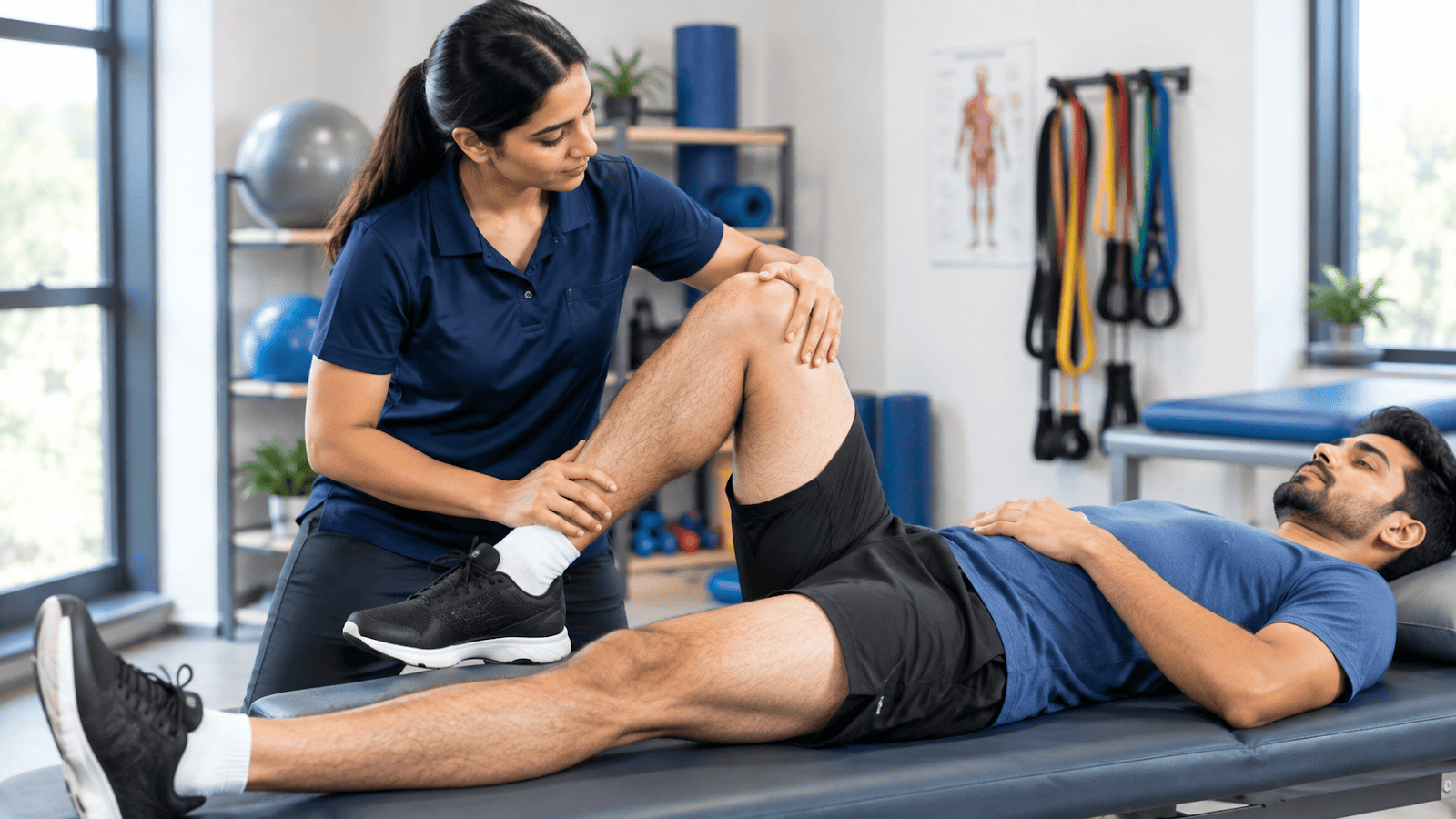
Post-surgery physiotherapy supports your rehabilitation after an operation. The appropriate starting time and pace depend on your procedure, surgeon’s instructions and individual health needs.
Your post-operative physiotherapy program may include:
- Pain and swelling-management strategies
- Range-of-motion exercises
- Strength and mobility training
- Balance and walking practice
- Functional movement exercises
- Education and a personalized home exercise program
- Guidance for returning to work, sport or daily activities
Personalized, Milestone-Based Rehabilitation
Every recovery timeline is different. Our physiotherapists assess your movement, monitor your progress and adjust treatment according to objective findings, surgical precautions and functional goals.
When appropriate and with your consent, we can communicate with your surgeon or healthcare team to help ensure your post-surgical rehabilitation in Oakville remains consistent with your operative instructions.
Whether you need hip replacement physiotherapy, knee replacement physiotherapy, ACL surgery rehabilitation or physiotherapy after spinal surgery, our team provides one-on-one support throughout your recovery process.
The Numbers Speak for Themselves
Our surgical rehabilitation outcomes at Oakville Physiotherapy Centre
of patients report significantly improved function after completing their full rehab program
faster return to work compared to unsupervised home recovery alone
better long-term outcomes for patients who complete pre-operative physiotherapy
years of post-surgical rehabilitation experience at Oakville Physiotherapy Centre
Why Prehab Changes Everything
The evidence is clear: patients who complete structured pre-operative physiotherapy enter the operating room stronger, recover faster, and leave hospital sooner. The table below summarises key outcome differences between patients who complete prehab and those who proceed to surgery without it:
| Outcome Metric | ✓ With Prehab | ✗ Without Prehab |
|---|---|---|
| Hospital stay (knee replacement) | 1.8 days average | 2.6 days average |
| Quadriceps strength at 4 weeks post-op | ~72% of contralateral limb | ~54% of contralateral limb |
| Return to independent walking | Week 3–4 | Week 5–7 |
| Pain medication use (first 2 weeks) | Significantly reduced | Higher reliance on opioids |
| Confidence with exercises on Day 1 post-op | High — exercises already familiar | Low — learning while in pain |
| Risk of stiffness / manipulation under anaesthesia | Lower | Higher |
Your Recovery Journey — Phase by Phase
Click each phase below to explore what physiotherapy involves at that stage of your recovery — from prehab through to full return to activity:
Several Weeks Before Surgery
Pre-Operative Physiotherapy and Prehab in Oakville
Build a stronger foundation before your operation with personalized pre-operative physiotherapy in Oakville.
A structured prehab program may help improve strength, mobility, range of motion and confidence before surgery. It also gives you an opportunity to learn the exercises, movement precautions and mobility strategies that may be required during post-operative recovery.
At Oakville Physiotherapy Centre, our pre and post surgery physiotherapy programs are tailored to your procedure, current fitness level, surgeon’s protocol and individual recovery goals. For patients seeking physiotherapy & rehabilitation in Oakville, prehab provides a planned transition from preparation before surgery to rehabilitation afterward.
Benefits and recovery timelines vary according to the procedure, health status and individual response.
Prehab Phase Goals:
- ✓Improve muscle strength and joint range of motion
- ✓Help manage existing pain, stiffness and swelling
- ✓Learn post-operative exercises and movement precautions
- ✓Support balance, cardiovascular fitness and general conditioning
- ✓Establish realistic rehabilitation goals with your physiotherapist
- ✓Practise safe walking, transfers and the use of mobility aids
- ✓Prepare your home environment for the early recovery period
Surgeries We Specialise In
Select your surgery type to see how our rehabilitation program is tailored specifically to your procedure:
Knee Replacement Physiotherapy in Oakville
Total and Partial Knee Arthroplasty Rehabilitation (TKA / UKA)Total or partial knee replacement surgery removes damaged joint surfaces and replaces them with prosthetic components. The procedure can help reduce arthritis-related knee pain and improve mobility, but every patient’s recovery experience and timeline are different.
At Oakville Physiotherapy Centre, we provide personalized knee replacement physiotherapy in Oakville for patients preparing for or recovering from total knee arthroplasty (TKA) and partial knee arthroplasty (UKA).
Pre-surgical physiotherapy may help you prepare by strengthening the quadriceps and hamstrings, improving knee range of motion, and practising exercises and movement strategies for after surgery. Following the operation, our total knee replacement rehabilitation programs progress according to your surgeon’s instructions, functional goals, and response to treatment.
During physiotherapy after knee replacement, treatment may focus on controlling swelling, restoring knee movement, rebuilding strength, improving balance, and helping you return to walking, stair climbing, work, and everyday activities. Although many rehabilitation programs progress over approximately 12–16 weeks, some patients may require a shorter or longer recovery period.
What Knee Replacement Physiotherapy May Address:
- ✓Post-operative knee swelling, stiffness, and reduced mobility
- ✓Difficulty bending or straightening the knee
- ✓Challenges with walking, stairs, and rising from a chair
- ✓Quadriceps and hamstring weakness
- ✓Altered walking patterns and reduced balance
- ✓Fear of movement and increased fall risk
- ✓Scar tightness after the incision has healed
- ✓Safe progression of home exercises and daily activities
Our post-surgery physiotherapy in Oakville is guided by a detailed assessment and adjusted throughout your recovery to support safe, measurable progress.
Benefits of Structured Surgical Rehab
Hover over each card to learn how our program supports your recovery at every stage:
Faster Recovery
Structured physiotherapy significantly reduces overall recovery time compared to unguided home rest alone.
Complication Prevention
Early mobilisation and guided exercise reduce the risk of DVT, pneumonia, joint stiffness, and muscle atrophy.
Personalised Protocols
Every plan is built around your surgery type, surgeon's protocol, fitness level, and functional goals — no generic programs.
Restored Strength
Progressive resistance training rebuilds muscle mass and functional strength lost during surgery and the acute healing phase.
Pain Management
Manual therapy, modalities, and movement education reduce reliance on pain medication and improve comfort throughout recovery.
Criteria-Based Discharge
You are cleared for sport, work, or full activity only once objective benchmarks are met — keeping you safe and confident.
Surgeon Collaboration
We liaise directly with your surgeon's team, ensuring the physiotherapy protocol aligns precisely with your operative report.
Psychological Support
Fear of re-injury and kinesiophobia are addressed throughout rehab, building the movement confidence essential to full recovery.
What to Expect at Oakville Physiotherapy Centre
From your first assessment to discharge, every step of your care is purposeful and transparent. Click each step to expand the details: