Neurological Physiotherapy in Oakville
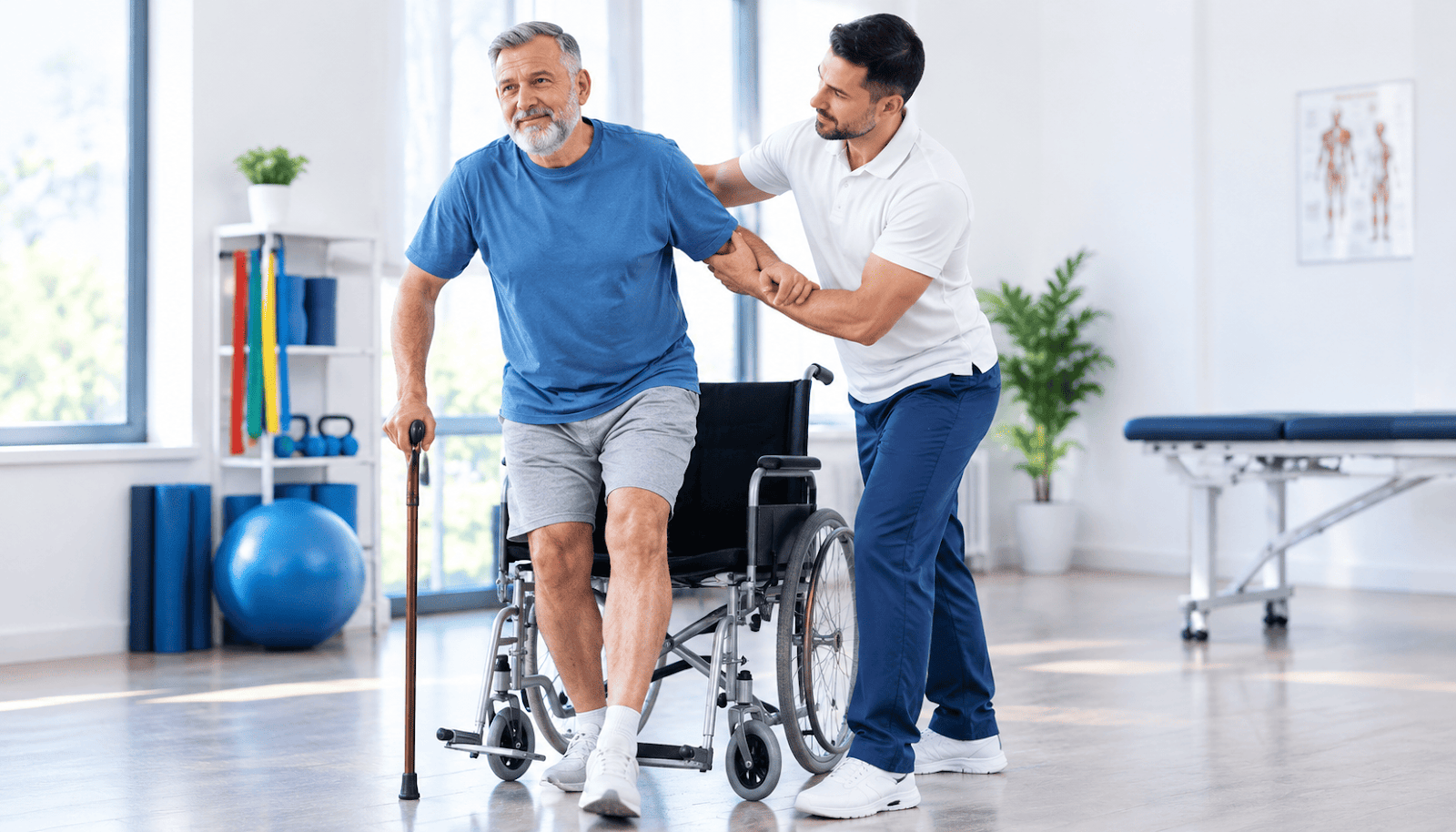
Neurological conditions such as stroke, Parkinson’s disease, multiple sclerosis, brain injury and spinal cord injury can affect balance, strength, coordination, walking and independence. Oakville Physiotherapy Centre provides personalized physiotherapy for neurological conditions based on each patient’s abilities and functional goals.
Treatment may include task-specific exercises, gait and balance training, strengthening, transfer practice, fall-prevention strategies and a customized home program. These approaches support neuroplasticity, the nervous system’s ability to adapt through practice although outcomes vary for every person.
Searching for “neurological physiotherapy near me” in Oakville? Our registered physiotherapists provide one-on-one, evidence-informed care focused on safer movement, improved function and greater independence.
Understanding Brain Function and Neurological Injury
Different brain regions support movement, balance, sensation and communication. Select a region to learn how stroke, brain injury or neurological disease may affect function and guide neurological physiotherapy.
Brain Region Function Map
Click any brain region to see how injury affects function
Proven Results in Neurological Recovery
Our commitment to evidence-based neurological rehabilitation
Improved mobility outcomes
Patient satisfaction rate
Hours of neuro therapy delivered
Years combined expertise
Neurological Conditions We Treat
Select a condition to learn how neurological physiotherapy may support movement, balance, strength and everyday function through personalized care.
Comprehensive Neurological Physiotherapy Assessment
Your first session assesses strength, balance, coordination, sensation, walking and functional movement. These findings help us create a personalized neurological physiotherapy plan based on your condition and goals.
Cognitive Assessment
- ✓Memory
- ✓Attention
- ✓Problem-solving
- ✓Processing speed
Mobility & Gait
- ✓Walking pattern
- ✓Balance
- ✓Transfers
- ✓Stair climbing
Upper Limb Function
- ✓Grip strength
- ✓Fine motor
- ✓Coordination
- ✓Reach ability
Communication
- ✓Speech clarity
- ✓Language
- ✓Swallowing
- ✓Voice strength
The Neurological Recovery Process
Recovery timelines vary, but neurological physiotherapy follows structured stages based on your needs and progress. Select a stage to learn what to expect throughout rehabilitation.
Your Recovery Journey
Understanding the phases of neurological recovery helps set realistic expectations
Acute Phase
Weeks 1-4Focus: Prevent complications, maintain range of motion, early mobility
Evidence-Based Neurological Physiotherapy Approaches
We use evidence-informed treatments tailored to your condition, abilities and goals. Hover over each approach to learn how it may support your recovery.
Neuromuscular Re-education
Precise movement retraining to rebuild motor control and coordination through repetitive, task-specific practice.
Task-Oriented Training
Real-world activities practiced in context — dressing, cooking, walking — to maximize functional carryover.
Gait & Balance Therapy
Body-weight supported treadmill training, perturbation exercises, and sensory integration to restore safe mobility.
Cognitive Rehabilitation
Memory strategies, attention training, and executive function exercises to restore mental sharpness.
Functional Electrical Stimulation
Computer-controlled electrical impulses activate weakened muscles to restore movement patterns during functional tasks.
Vestibular Rehabilitation
Specific exercises to resolve dizziness, improve gaze stability, and restore balance after concussion or stroke.
What Makes Our Neuro Program Different
Specialized Training
Our therapists hold advanced certifications in neurological physiotherapy, not just general PT training.
Multidisciplinary Care
We work alongside OTs, SLPs, psychologists, and physicians to coordinate comprehensive recovery.
Home Exercise Integration
Neuroplasticity requires daily practice — we provide clear, personalized home programs with video support.
Objective Progress Tracking
We use validated outcome measures every 4-6 weeks to quantify improvement and adjust your plan.